Fibre, textiles & apparel
Fibre preparation, spinning, weaving, knitting, dyeing, felting, printing, patternmaking, tailoring, millinery and industrial textiles.
The national public field for Australian craft practices, practitioners, conservators, cultural practitioners, enterprises, Centres and productive capability.
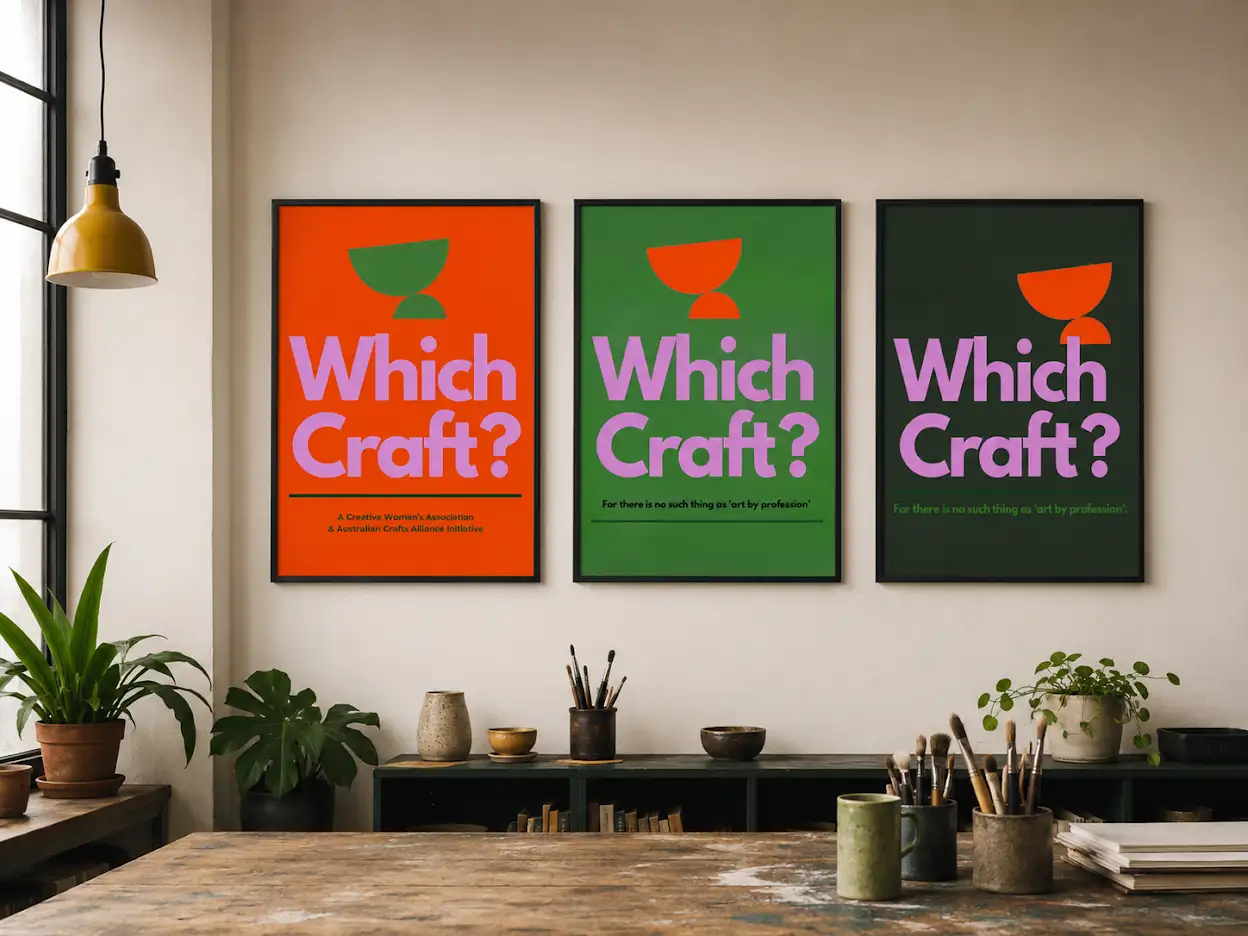
Which Craft? answers four practical questions: what capability exists, who holds it, where it is active and how it can be reached. It brings together fields that are currently scattered across arts, trades, manufacturing, heritage, food, fashion, design and research classifications.
Which Craft? provides public discovery of fields and active places; the provenance registry holds the supporting practitioner and product records.
Current service portal. The established searchable directory remains available through the Secretariat while its records and search functions are migrated into ACA’s independent system.
Fields are organised around material, process and productive capability—not taste or hobby categories. This makes equipment, specialist knowledge, production gaps, training pathways and collaboration opportunities visible.
The list can expand as evidence is gathered. A practitioner may appear across more than one field where their work genuinely crosses materials or production stages.
Fibre preparation, spinning, weaving, knitting, dyeing, felting, printing, patternmaking, tailoring, millinery and industrial textiles.
Forestry knowledge, milling, joinery, furniture, carving, turning, structural work and wooden boatbuilding.
Forging, machining, casting, welding, toolmaking, architectural hardware and specialist finishing.
Kiln and furnace practice, glasswork, masonry, carving, brickmaking, glaze, tableware and architectural production.
Material preparation, saddlery, harness, whipmaking, footwear, bags, casework, upholstery and leather goods.
Gold and silversmithing, setting, enamelling, hollowware, scientific glass and small-scale precision making.
Cheesemaking, baking, brewing, distilling, preserving and other skilled transformation of ingredients through learned judgement.
Conservation and repair across stone, timber, metal, plaster, glass, textiles, books, objects, instruments and long-lived products.
Computer-controlled production, scanning, modelling, sensing and automation combined with material knowledge and human judgement.
Making and transmission in which consent, attribution, access and use remain governed by the relevant cultural authorities and knowledge holders.
The Mapping report uses precise terms so the directory can recognise the full range of productive work across the sector.
Each record serves a distinct function and connects to the appropriate assessment, provenance or legal pathway.
People actively engaged in making, modifying, repairing, conserving, consequential production work or transmitting knowledge and skills grounded in practical capability. Commercial status, income or formal qualification does not alone determine inclusion.
Practitioner-led small-scale producers operating within field-specific thresholds while retaining control at consequential production stages.
Practitioners who assess, maintain, repair or conserve objects, buildings, tools and working material systems—and the specialist knowledge required to keep them in use.
Knowledge holders and practitioners working within living cultural traditions. Any record must respect community authority, consent, ICIP, restrictions and decisions about what may remain private.
Practitioners, producers, conservators, cultural organisations and active Centres are building the first connected national view of the field.
Participation pathways